
Basic Principles of a Gas Tankless Water Heater
A gas tankless water heater operates by heating water as it flows through the unit, without a storage tank. This on-demand system delivers a continuous supply of hot water whenever you turn on a faucet. (Deciding between systems? See our tank vs tankless comparison guide.)
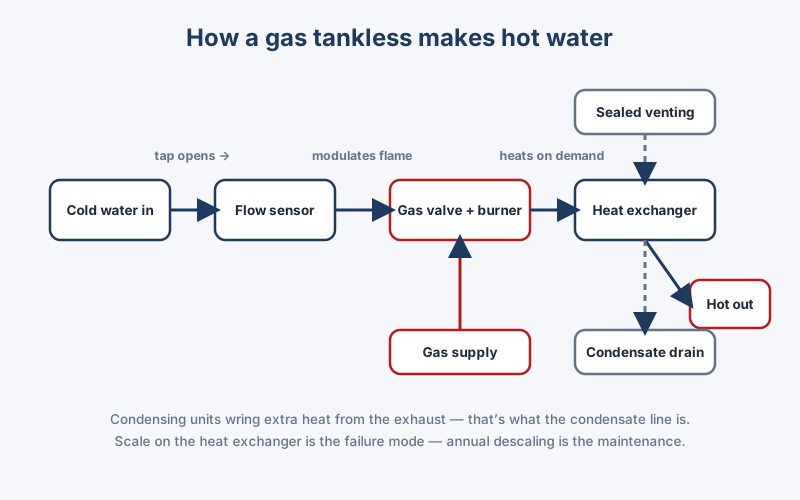
When a hot water tap is opened, cold water enters the unit through an inlet pipe. Inside, a gas burner ignites to heat the water instantaneously. As cold water flows through a heat exchanger, the heat from the burner transfers to the water, raising its temperature to your set level.
How This Differs From a Tank Water Heater
A traditional tank heater stores 40-80 gallons of water and keeps it hot 24/7 — even when you're sleeping or at work. A tankless unit only burns gas when you actually need hot water. This fundamental difference is why tankless units are 20-30% more energy efficient.
Key Components
- Gas Burner — Located at the bottom, it ignites when hot water is requested and burns natural gas or propane to create heat
- Heat Exchanger — Made of copper or stainless steel, it transfers heat from the burner to the water flowing through it. This is the core of the system
- Water Flow Sensor — Detects when you open a hot water tap and signals the heater to ignite
- Venting System — Safely removes combustion gases (carbon dioxide, water vapor) from your home
- Control Panel — Allows you to set your desired water temperature and displays diagnostic codes
- Gas Valve — Controls gas flow to the burner, opening when hot water is needed and closing when demand stops
- Safety Features — Flame sensors, high-temperature cutoff switches, and overheat protection
The Ignition and Heating Process
Here's what happens in the 2-3 seconds after you turn on a hot water faucet:
- The flow sensor detects water movement and sends a signal to the control board
- The control board opens the gas valve, allowing fuel into the burner chamber
- An electronic igniter creates a spark to light the gas-air mixture
- The flame sensor confirms ignition and signals the control board to continue
- Cold water flows through the heat exchanger, absorbing heat from the burner
- The control board monitors outgoing water temperature and modulates the flame to maintain your set temperature
- When you close the faucet, the flow sensor detects the stop, the gas valve closes, and the burner shuts off
This modulation feature is key — the unit adjusts flame intensity based on demand, which maximizes efficiency.
Advantages of Gas Tankless Water Heaters
- Endless hot water — no tank to run empty, perfect for large families
- 20-30% energy savings over traditional tank heaters
- Compact, wall-mounted design frees up floor space
- Longer lifespan — 15-20+ years vs. 8-12 for tank heaters
- No risk of tank flooding — a common concern in Chicago basements
- May qualify for energy tax credits
Disadvantages to Consider
- Higher upfront cost — on the order of double a tank unit installed
- Limited flow rate — may struggle with simultaneous demands (e.g., shower + dishwasher)
- Gas line requirements — may need a larger gas line or upgraded venting
- Annual descaling needed — especially important in Chicago where water hardness averages 8-10 grains per gallon
Chicago-Specific Consideration
Chicago's groundwater drops to 35-40°F in winter. Your tankless unit must raise water temperature by 70-80 degrees (vs. 40-50 in warmer climates). Make sure you choose a unit rated for cold-climate performance — not just the manufacturer's warm-climate flow rates. Our tankless installation team sizes units for Chicago winters specifically.
Maintenance Tips
- Have it flushed and descaled annually — removes mineral buildup from the heat exchanger. Essential in Chicago's hard water — our tankless repair and maintenance service handles this
- Watch the venting — check the termination outside for blockages (leaves, bird nests, ice in winter)
- Smell for gas — any odor near the unit or its connections means leave and call the gas utility first
- Schedule professional service annually — the burner, T&P valve, and combustion checks happen on that visit
Considering a tankless water heater for your Chicago home? Call Plumbers 911 Chicago at 833-758-6911 for expert installation and repair throughout the Chicago metro area.