
Tank vs Tankless Water Heaters: Which Is Right for Your Chicago Home?
Replacing your water heater is one of the biggest plumbing decisions a homeowner makes. The choice between a traditional tank water heater and a modern tankless unit depends on your household size, hot water usage, budget, and home infrastructure.
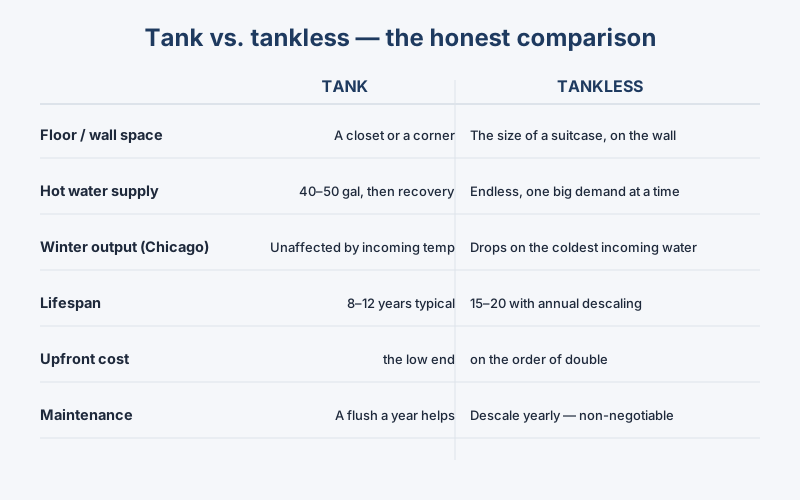
Here's everything Chicago homeowners need to know to make the right choice.
How Tank Water Heaters Work
Traditional tank water heaters store 30-80 gallons of water in an insulated tank, keeping it heated and ready for use. When you turn on a hot water faucet, pre-heated water flows from the top of the tank while cold water enters the bottom to be heated.
Pros:
- Lower upfront cost — the low end of water heater replacements
- Simpler installation
- Works with existing gas or electric connections
- Reliable technology with decades of proven performance
Cons:
- Higher energy bills (heating water 24/7 whether you use it or not)
- Limited hot water supply (can run out during peak usage)
- Larger physical footprint
- Shorter lifespan (8-12 years typical)
- Risk of tank failure and flooding
How Tankless Water Heaters Work
Tankless (on-demand) water heaters heat water only when you need it. When a hot water tap is opened, cold water flows through a heat exchanger powered by gas or electricity, delivering hot water on demand without storing it.
Pros:
- Endless hot water supply
- 20-30% more energy efficient than tank models
- Compact wall-mounted design saves space
- Longer lifespan (15-20+ years)
- No risk of tank flooding
- May qualify for energy tax credits
Cons:
- Higher upfront cost — on the order of double a tank installed
- May require gas line upgrade for gas models
- Limited flow rate (may struggle with simultaneous demands)
- Annual descaling maintenance is recommended in hard water areas — we service both types
Chicago-Specific Considerations
Chicago's climate and water conditions create unique factors:
Cold Incoming Water: Chicago's groundwater temperature drops to 35-40°F in winter. Tankless heaters must work harder to raise water temperature by 70-80 degrees versus 40-50 degrees in warmer climates. This means you may need a higher-capacity unit than the manufacturer's "warm climate" ratings suggest.
Hard Water: Chicago's water hardness averages 8-10 grains per gallon. Hard water causes mineral buildup (scale) in tankless heat exchangers, requiring annual descaling. Consider adding a water softener if going tankless.
Natural Gas Availability: Most Chicago homes have natural gas, making gas tankless heaters a viable option. Gas models deliver higher flow rates than electric models, though some homes need a gas line upgrade first.
Cost Comparison for Chicago Homes
| Factor | Tank | Tankless |
|---|---|---|
| Upfront cost | the low end | on the order of double |
| Monthly energy use | higher — heats 24/7 | lower — heats on demand |
| Annual maintenance | Minimal | annual descaling in hard water |
| Lifespan | 8-12 years | 15-20 years |
| Lifetime cost | usually the cheaper path | higher upfront, lasts longer |
Our Recommendation
Choose a tank water heater if:
- Budget is your primary concern
- Your home has 1-2 people
- You don't mind occasional hot water limitations
- You're replacing an existing tank unit in-kind — see our water heater installation service
Choose a tankless water heater if:
- You want endless hot water for a larger household
- Energy efficiency and lower monthly bills matter to you
- You plan to stay in your home 10+ years
- You're building new or doing a major renovation — see our tankless installation service
Professional Installation Matters
Whichever type you choose, professional installation is critical for safety, efficiency, and warranty protection. Gas water heaters require proper venting and gas line connections. Tankless units may need electrical upgrades or larger gas lines. If your current unit is acting up but not dead yet, water heater repair may buy you time to plan the replacement.
Ready to replace your water heater? Call Plumbers 911 Chicago at 833-758-6911 for a free consultation. We install both tank and tankless water heaters and can help you choose the best option for your Chicago home.