
What's Safe to Try at Home
A clogged drain is one of the most common plumbing problems homeowners face. Before reaching for harsh chemical drain cleaners (which can damage your pipes), these harmless methods are worth a try — and knowing where to stop is half the job.
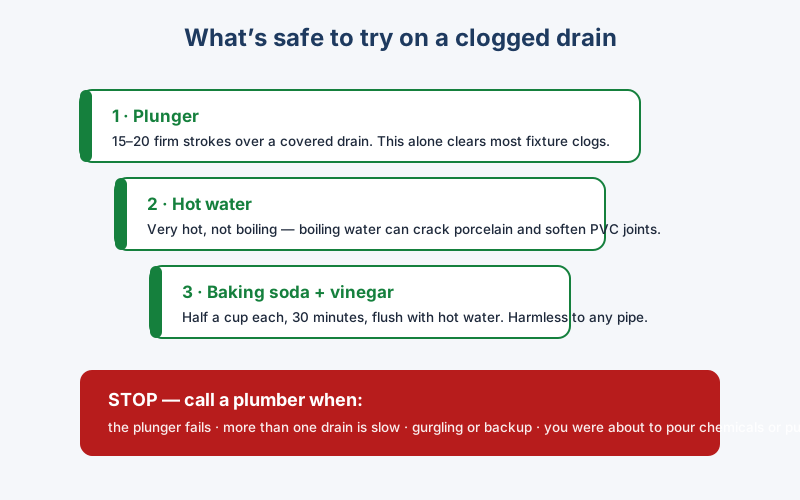
1. Baking Soda and Vinegar
This classic combination creates a chemical reaction that helps break up clogs.
How to use it:
- Pour 1/2 cup of baking soda down the drain
- Follow with 1/2 cup of white vinegar
- The mixture will foam and bubble — this is normal and means it's working
- Cover the drain with a plug or cloth to contain the reaction
- Wait 30 minutes to 1 hour
- Flush with hot water
This method works well for organic buildup, soap scum, and minor grease clogs. You may need to repeat 2-3 times for stubborn blockages.
2. Boiling Water
The simplest method — and often surprisingly effective for grease clogs.
How to use it:
- Boil a full kettle or large pot of water
- Pour it slowly down the drain in 2-3 stages
- Wait a few seconds between each pour to let the hot water work
Important: Do NOT pour boiling water into PVC pipes or on porcelain fixtures — the heat can damage them. Use very hot (not boiling) tap water instead.
3. Salt and Hot Water
Salt acts as a mild abrasive that helps dissolve grease and buildup.
How to use it:
- Pour 1/2 cup of table salt down the drain
- Follow with boiling water (if safe for your pipes)
- Let it sit for a few minutes, then flush with hot water
For tougher clogs, combine 1/2 cup salt with 1/2 cup baking soda, let sit overnight, then flush with hot water in the morning.
4. Dish Soap and Hot Water
Particularly effective for grease clogs in kitchen sinks.
How to use it:
- Squirt a generous amount of dish soap down the drain
- Pour boiling water down in stages
- The soap acts as a lubricant to break up greasy blockages
5. Plunger
A plunger creates suction and pressure that can dislodge many common clogs.
How to use it:
- Fill the sink with enough water to cover the bottom of the plunger cup
- Place the plunger over the drain, creating a tight seal
- Push down firmly, then pull up quickly — repeat 15-20 times
- Check if water starts draining
- Repeat if necessary, increasing force with each set
Tip: Use a flat-bottom plunger (cup plunger) for sinks. The flanged plunger is designed for toilets.
Where to Stop
The methods above are the harmless end of the scale. Past them are the tools — snakes, augers, trap removal — and that's where homeowners get into trouble: a hardware-store snake pushed into a pipe you can't see usually compacts the clog or scratches the pipe, and a trap taken apart often goes back together with a slow leak you don't notice for a week. If the plunger didn't do it, that's a drain cleaning call, not a bigger tool.
What NOT to Put Down Your Drain
Many clogs are preventable. Avoid putting these down your drains:
- Grease and cooking oil — solidifies in pipes
- Coffee grounds — accumulates and creates blockages
- Hair — use a drain screen to catch it
- Fibrous foods — celery, potato peels, onion skins
- "Flushable" wipes — they don't break down like toilet paper
When to Call a Professional Plumber
Home remedies work for most minor clogs. But call for professional drain cleaning if:
- The clog keeps coming back
- Multiple drains are clogged simultaneously (possible sewer line issue)
- You hear gurgling sounds from other drains
- Water backs up in unexpected places
- You smell sewage
- You've tried multiple methods without success
Persistent or recurring clogs often indicate a deeper problem — tree root intrusion, a collapsed pipe, or main sewer line blockage — that requires professional equipment like a sewer camera inspection to diagnose. Heavy grease or scale buildup may call for hydro jetting, which scours the full pipe diameter clean.
Stubborn clog that won't budge? Call Plumbers 911 Chicago at 833-758-6911 for professional drain cleaning service throughout Chicago and surrounding suburbs.