
Why fall catches Chicago basements off guard
Spring gets the attention, but October and November produce their own run of flooded basements. Three things line up: slow-moving fall systems can drop an inch or two of rain over a day, the ground is already saturated from the summer, and leaves clog the gutters and downspouts so roof water lands right against the foundation. The clay soil most of Cook and DuPage counties sit on holds that water instead of draining it, the water table rises, and the sump pit fills faster than people expect.
The other factor is the pump itself. A pump that cycled constantly in April and May has often sat idle through a dry August and September. Floats stick, check valves gum up, and a motor that was already marginal in spring quietly dies in the pit. Nobody finds out until the first big storm, usually at night.
The 10-minute test
You need a 5-gallon bucket of water and a flashlight.
- Find the pit and remove the lid. Note what's in it. A clean pit with clear water is a good sign. Silt, gravel, a dead mouse or a layer of iron bacteria sludge (orange slime) all interfere with the float and the intake.
- Check the float before adding water. Reach in and lift it gently. If it's a tethered float on a cord, make sure it swings freely without catching the pit wall, the discharge pipe or a power cord. Vertical floats should slide up and down the rod without binding.
- Pour the water in slowly. Watch for the moment the pump turns on. The float should trigger it well before the water reaches the top of the pit. If you have to pour the whole bucket before anything happens, the float is set too high or sticking.
- Listen. A healthy pump has a steady hum, then the sound of water moving in the discharge pipe. Grinding, rattling or a hum with no water movement means an impeller problem or a jammed intake.
- Watch it shut off. The pump should stop within a few seconds of the water dropping below the float. Short cycling (on, off, on, off while the water level is clearly low) points to a check valve that isn't holding or a float set too tight.
- Go outside and find the discharge. Water should be coming out of the discharge pipe and running away from the foundation. If nothing comes out, the line may be blocked or disconnected; if it dumps right next to the wall, you're pumping the same water in a loop.
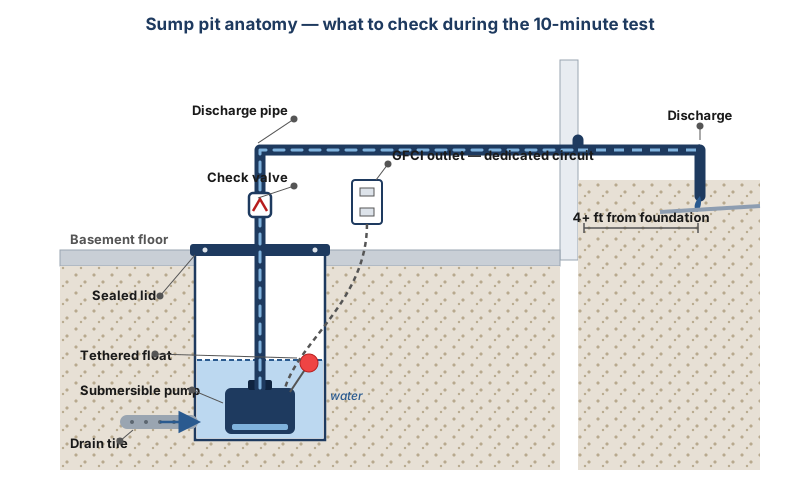
What each result means
- Pump runs, moves water, shuts off cleanly: you're in good shape. Note the age if you can find a date on the housing. Most residential pumps last 7 to 10 years in Chicago conditions; past that, plan the replacement rather than waiting for it.
- Float sticks or has to be lifted by hand: that's a plumber visit; mention what you saw — debris in the pit and a float without clearance are usually the same fix.
- Pump hums but doesn't pump: the impeller is jammed or the intake is packed with debris; that's a plumber visit — tell them the pump runs but nothing moves.
- Short cycles: the check valve on the discharge pipe is letting water fall back into the pit; that's a plumber visit — mention that you watched it cycle.
- Pump doesn't turn on at all: check the outlet with another device. Pumps should be on their own GFCI-protected circuit; a tripped GFCI is a common and easy fix. If the outlet is live and the pump is dead, it's replacement time.
- Water comes up around the pit, not into it: your drain tile may be clogged with silt or roots, so groundwater isn't reaching the pit. That's a bigger conversation and worth a camera inspection.
The failure that has nothing to do with the pump
The most common reason a working sump pump floods a basement is a power outage during the storm. The storm that fills the pit is the same storm that drops the lines. If your basement is finished or you store anything down there you'd miss, a battery backup pump is not optional. Modern units run 6 to 12 hours on a charged battery, sound an alarm when they kick in, and some will text your phone.
If you're on Chicago city water and don't want to maintain a battery, a water-powered backup pump uses municipal pressure to pump out the pit. It moves less water than a battery unit, but it runs as long as the city does.
Repair or replace?
Replace when: the pump is more than 7 years old and showing any symptom; the motor has failed; it's a pedestal pump in a pit that floods regularly; or you've already replaced the switch once. A new submersible pump correctly sized for the pit, with a new check valve and a sealed lid, is a modest job. Repairing a tired pump is usually money spent twice.
Repair (or just maintain) when: the pump is under 5 years old, the problem is the float, the check valve, debris or the GFCI, and the housing shows no rust or cracks.
While you have the lid off
- Clear the gutters and extend downspouts at least 4 feet from the foundation. Half the water entering Chicago sump pits comes off the roof.
- Confirm the discharge line isn't tied into the sanitary sewer. In Chicago that's a code violation and it contributes to the combined-sewer overflows that back up into basements during storms.
- Make sure the pit has a sealed cover. Open pits release radon and humidity and collect debris.
- Put a reminder in your phone to run this test again in March.
If the storm is already here
A pit that's rising faster than the pump can handle, or a pump that has gone silent while the water climbs, is an emergency. For the non-emergency version — a spring and fall pump inspection is the cheap insurance. Call 833-758-6911; a live person answers 24/7 and a union plumber from Plumbers Local 130 can be dispatched with a replacement pump. While you wait, move anything that matters off the floor and kill power to any outlets that water might reach.