
Why water heaters die in January
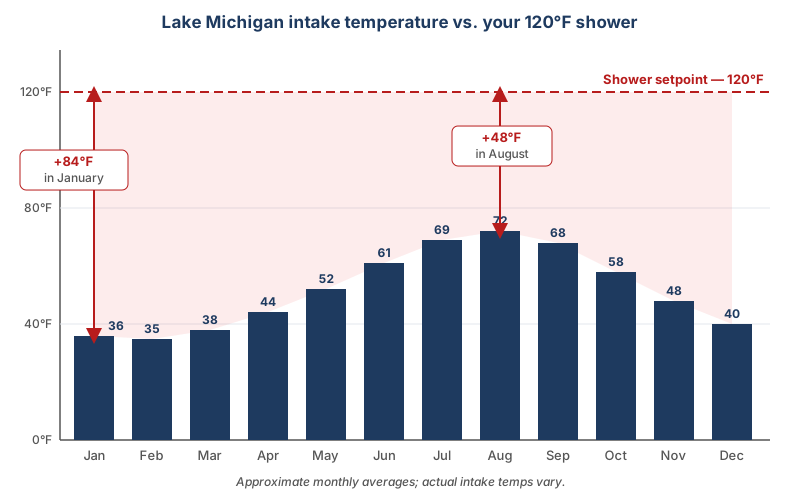
Lake Michigan water entering Chicago homes is around 70°F in late summer. By January it's in the low 40s. To deliver the same 120°F shower, your water heater has to add roughly twice as much heat per gallon, which means longer burner cycles, more thermal stress on the tank, and more condensation running down the outside of the flue. A tank that was quietly on its last legs in August meets that workload and quits, usually during the first stretch of single-digit nights, when every plumber in the city is busy with frozen pipes.
October is the month to look. Here's what to look for, in rough order of how urgent it is.
1. Water around the base of the tank
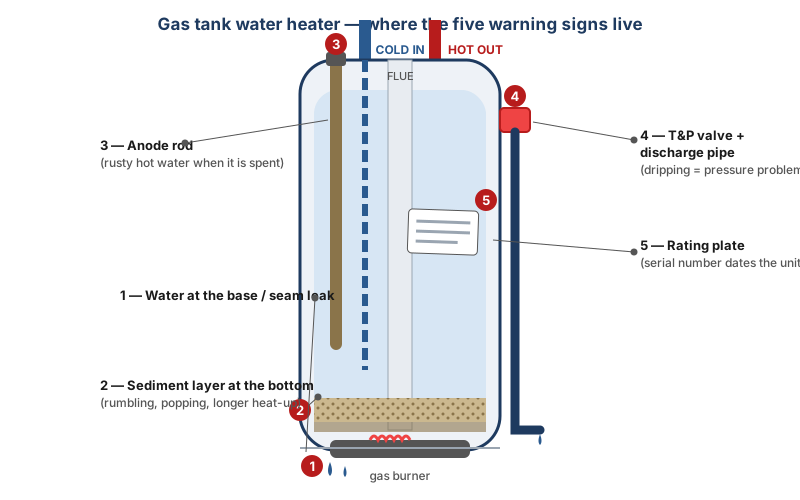
Walk around the heater with a flashlight and look at the floor and the bottom edge of the jacket. A small puddle, a rust stain on the concrete, or a damp ring under the tank almost always means the tank itself has started to corrode through. There is no repair for that; the tank is a steel vessel with a glass lining, and once the lining fails and the steel rusts through, replacement is the only option.
Before you conclude that, rule out the two innocent explanations: a dripping temperature-and-pressure relief valve (the brass valve on the side or top with a pipe running down toward the floor) and condensation on a cold tank after a heavy draw. Dry the area, run hot water for ten minutes, and check again in an hour. Water from the T&P discharge pipe is a different problem (see #4). Water from the seam at the bottom of the tank is a replacement.
A tank that is leaking slowly in October will not leak slowly in January. The failure mode is a seam letting go and 40 to 50 gallons on the floor, followed by the cold supply running continuously into the failed tank until someone shuts it off.
2. Rumbling, popping or banging when it heats
Chicago water is moderately hard. Over years, dissolved minerals settle at the bottom of a tank-style heater and form a layer of sediment. When the burner fires, water trapped under the sediment flashes to steam and pops through it; that's the rumble. It means the burner is heating a layer of rock before it heats your water, the bottom of the tank is being overheated, and the glass lining there is being stressed every cycle.
If the heater is under about 8 years old, a plumber can flush the tank, which clears a lot of it and buys real time. If it's older and loud, the sediment has usually hardened, flushing won't move it, and the noise is a countdown.
3. Rusty or discolored hot water
Run the hot tap only into a white bucket or sink. Brownish or rusty water that clears after a minute is coming from the pipes. Water that stays discolored, or that is only discolored on the hot side, is coming from inside the tank, which means the sacrificial anode rod is used up and the tank wall is now the thing corroding.
A plumber can replace the anode rod, and that's worthwhile on a younger tank. On a tank past 10 years with rusty water, the anode has been gone for a while and the damage is done.
4. The T&P valve is discharging
The temperature-and-pressure relief valve opens when the tank exceeds 150 psi or about 210°F. If its discharge pipe is dripping or has a mineral crust at the end, the valve is either worn (common, inexpensive to replace) or it's doing its job because the tank is actually over-pressurizing. The latter happens in homes with a check valve or pressure-reducing valve on the main that creates a closed system; heated water has nowhere to expand. The fix is an expansion tank, and in Chicago it's required on new installations for that reason.
Don't ignore a discharging T&P valve, and never let anyone cap it. It's the only thing standing between an over-pressurized tank and a very bad day.
5. It's more than 10 years old and you can't remember the last problem
The serial number on the rating plate encodes the manufacture date; the first two digits or the first letter-and-digits usually give you the year, and the manufacturer's website will decode it. Standard tank heaters in Chicago conditions last 8 to 12 years. Past that, every winter is a gamble on whether it fails on a Tuesday afternoon or at 11 PM on New Year's Eve with a house full of people.
Planning the replacement in October has three advantages: you choose the unit instead of taking whatever's on the truck, you can decide whether a tankless or a heat-pump model makes sense for your house, and you aren't paying for an emergency visit while the basement dries out.
Smaller things worth doing this month
- Check the temperature setting. 120°F is the safe-and-efficient point. Higher accelerates sediment and scald risk.
- Look at the venting on a gas heater: the draft hood should be seated, the flue pipe should rise continuously to the chimney or wall vent with no sags, and there should be no white or rusty staining around joints, which indicates exhaust leaking into the room.
- Clear the area. Paint cans, boxes and cat litter near a gas water heater are a combustion-air and fire issue.
- Test the shut-off valve on the cold inlet. If it's a round gate valve that hasn't moved in a decade, it may not close when you need it to. A plumber can swap it for a quarter-turn ball valve in minutes.
When to call
If you found water at the base, rusty hot water, or a T&P valve that's actively discharging, call 833-758-6911 and have it looked at before the cold arrives. A union plumber from Plumbers Local 130 will tell you honestly whether it's a repair or a replacement and get the price before any work starts. If it has already failed and there's water on the floor, shut off the cold supply at the valve on top of the heater, turn the gas control to "off" (or flip the breaker for an electric unit), and call; a live person answers 24/7.