
The repair is rarely the expensive part
A split in an exposed copper line in an open basement is one of the shorter jobs a plumber does. The same split inside a finished wall, behind tile, or under a slab is the same plumbing with a lot more getting-to-it, and the water that came out of it before anyone noticed is where the real cost lives. When people compare "burst pipe repair" prices they're usually comparing very different situations.
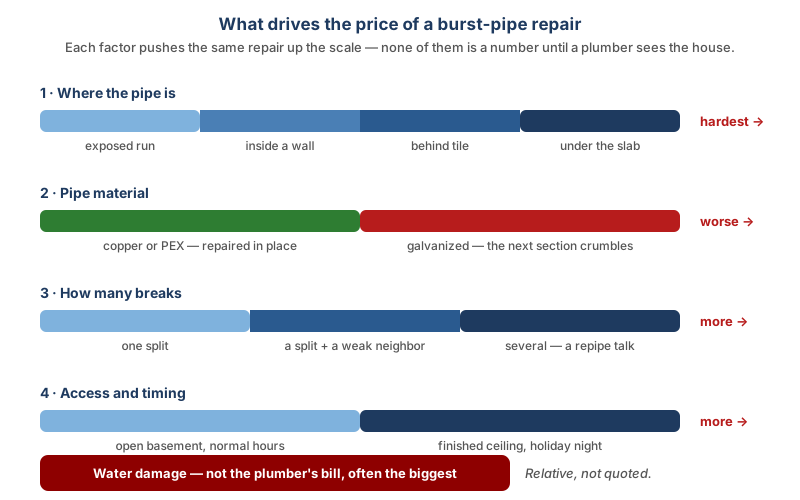
What moves the number
Where the pipe is. Exposed in a basement or utility room: small. Inside a wall or ceiling: add the opening and the patch. Behind a tiled shower wall: add tile work. Under a slab or in a crawlspace: a different scale of job, and sometimes rerouting the pipe is cheaper than reaching the break.
What the pipe is made of. Copper and PEX are repaired in place with standard fittings. Galvanized steel is the problem child in Chicago: it's threaded, it's corroded, and when a plumber cuts out a split section the next section often crumbles. Galvanized repairs have a way of turning into "replace the run," which is why they're the usual trigger for a repipe conversation.
How many breaks. A freeze rarely splits a pipe in one place. The plumber will pressure-test after the first repair, and finding two or three more weeping fittings along the same cold run is common.
Time and access. Night, holiday, and whether the plumber can get to the pipe without moving a built-in or opening a ceiling.
What the water did. This isn't the plumber's bill, but it's your cost: drywall, insulation, flooring, cabinets, and drying out the structure before mold starts. A pipe that ran for an hour is a plumbing job. A pipe that ran for four days while you were away is a restoration project.
What homeowners insurance usually covers
Most standard policies cover sudden and accidental water damage. A pipe that froze and burst is the textbook case. Covered, typically: the water damage to the structure and your belongings, drying and remediation, and in many policies the cost of tearing out and replacing what's needed to reach the broken pipe. Usually not covered: the repair of the pipe itself (the plumbing part), and anything the adjuster can attribute to neglect or gradual leaking.
The neglect question is the one to be ready for. Policies often exclude freeze damage if the house was unoccupied and the heat wasn't maintained. If you were traveling, be able to say the thermostat was set and the heat was on. Here's the departure checklist that makes that an easy conversation.
Sewer backups are a separate rider on most policies and are not part of this; see the floor drain article for that.
The documentation that decides the claim
- Photos and video before anything is cleaned up. The source of the leak, the standing water, the damaged materials, the water line on the drywall.
- The plumber's invoice stating what failed and where. Ask for it to say "frozen and split supply line" or whatever the actual cause was, not just "pipe repair."
- The broken section of pipe. Ask the plumber to leave it with you. Adjusters sometimes want to see it.
- A log: when you found it, when you shut the water off, when you called, who came.
- Receipts for anything you buy in the meantime (fans, dehumidifier, a hotel if the house is unlivable).
Call the insurer the same day. Most policies require prompt notice, and a quick call starts the clock on the adjuster visit.
Mitigation is on you
Policies require you to prevent further damage once you know about it. That means shutting off the water, removing standing water, and getting air moving. It doesn't mean you have to fix the pipe before the adjuster sees it; it means you can't let the basement sit wet for a week waiting for them. Keep it reasonable and keep receipts.
After the repair: stop the repeat
If the pipe froze once, it will again unless the conditions change. The plumber can tell you whether the fix is insulation, air-sealing the spot where cold air reaches the pipe, a heat cable, or moving the line to an interior wall. On galvanized plumbing, the honest answer is often that the system is at the end of its life. Here's how to think about pipe insulation in a Chicago bungalow.
If you've got water coming from a split pipe right now: main shutoff, power off to anything wet, photos, then 833-758-6911. A live person answers around the clock and a union plumber from Plumbers Local 130 can be dispatched. Get the price before any work starts, and ask for that invoice wording.